
Buyer guide
What Are the Parts of a Hospital Bed
A practical guide to reading hospital bed components and comparing published product information before an inquiry.
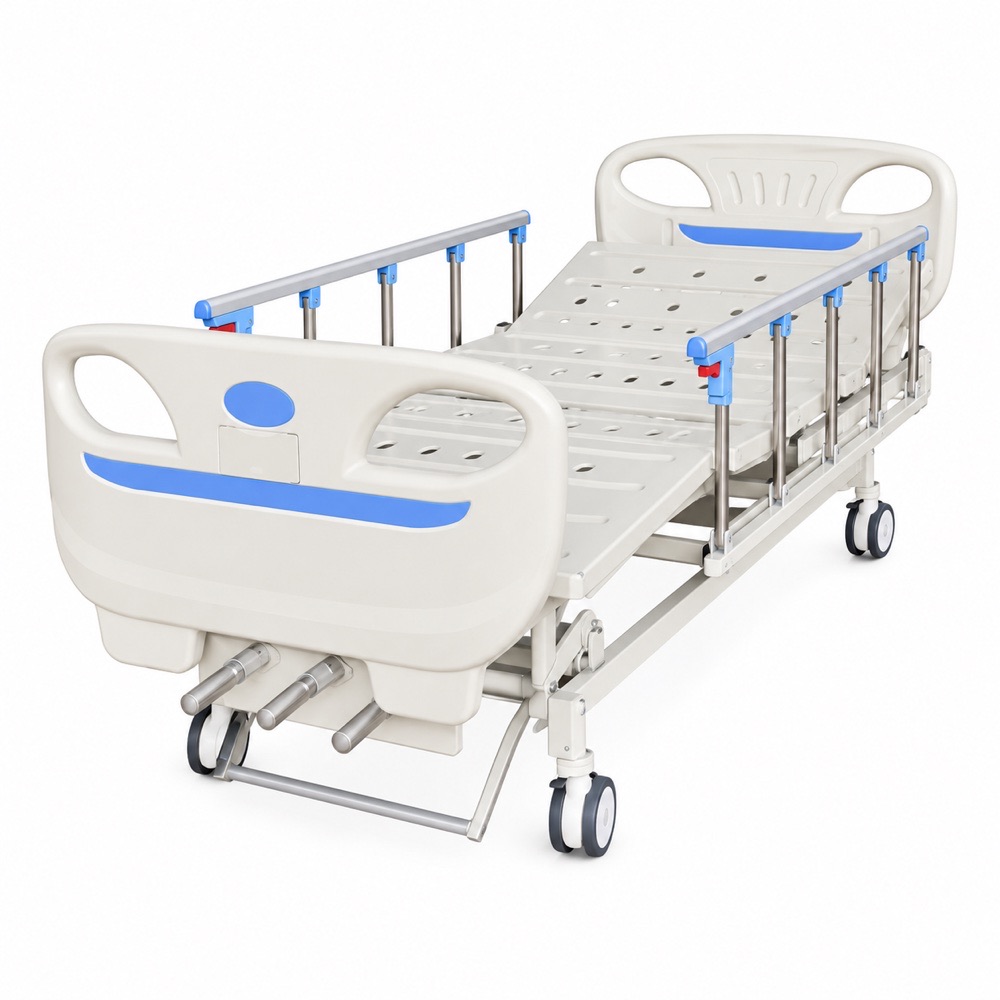
A hospital bed is a group of product components
A hospital bed is easier to compare once a buyer can read it as a group of connected product parts. A product photo may show the whole bed, but each visible section has its own purpose in a product review. The frame supports the structure. The bed surface relates to the lying area. Head and foot boards, side rails, casters, brakes, and controls each give the buyer a different piece of information.
The important point is that hospital bed components are product-specific. One bed may show a certain side-rail style or control method, while another product in the same broad category may use a different arrangement. A useful review begins with the Hospital Beds category, then moves to the published information for the product being considered.
The Types of Hospital Beds guide can help buyers separate manual and electric product directions before comparing components. A manual ward bed and an electric care bed can both be hospital beds, yet their adjustment systems and published components may not be the same.
The frame and bed surface form the starting point
The frame provides the basic structure of the bed. It is the foundation that brings the other parts together. The bed surface sits within that structure and supports the patient area. In a product comparison, these two elements help a buyer understand the overall product direction before looking at smaller components.
The published information for a selected product may describe the bed surface or show it clearly in product images. Some hospital beds may present a solid-looking surface, while others may show a perforated or segmented arrangement. These details should be considered only as they appear on the product being reviewed. They are not a general statement about every hospital bed in the range.
The Manual Hospital Beds direction can help buyers who are beginning with a manual product review. The Electric Hospital Beds direction supports a separate comparison for powered adjustment products.
Buyers who need to review dimensions can continue to the Hospital Bed Size Guide. Any dimensions should be confirmed for the selected product.
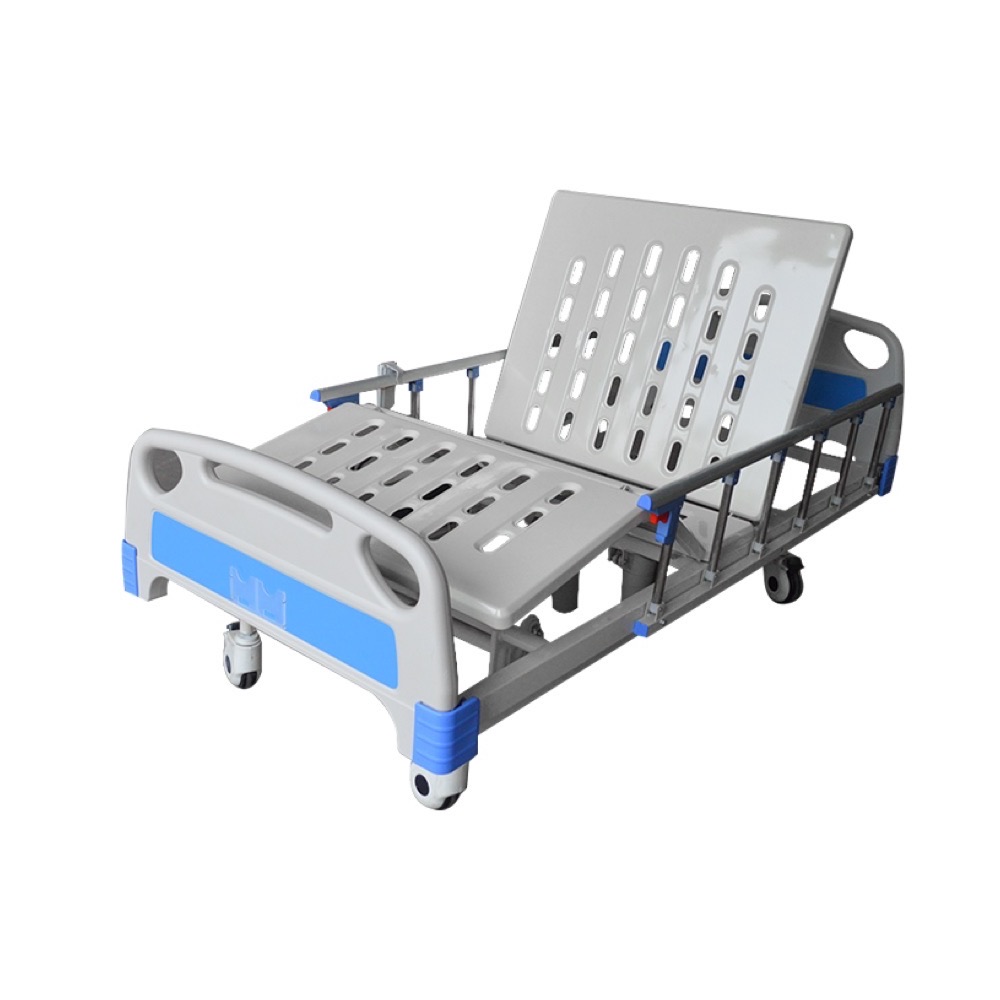
Head and foot boards and side rails shape the bedside layout
Head and foot boards are the panels located at each end of a hospital bed. They are often easy to see in product photos, so they can help a buyer distinguish one product direction from another. Their appearance, material, and arrangement may vary between products. A published image can be useful for a first review, but it should be read with the written product information.
Side rails are another visible part that deserves attention. They may be shown in different forms depending on the product. A buyer may review their position, appearance, and relationship to the overall bedside layout. This is not a clinical assessment. It is simply a way to understand what is visibly included in the selected product direction.
Picture a ward coordinator opening two product pages before a room refresh. At first glance, both beds may seem alike. Looking separately at the rail position, the end boards, and the open space around the mattress gives the coordinator a calmer way to explain why one product deserves a closer review. This is an illustrative planning moment, not a customer project or outcome.
For ward projects, the Hospital Wards application page gives useful context for how hospital beds fit into a wider room requirement. It should not be used as a substitute for product-specific confirmation. The room setting can guide the comparison, while the product page should guide the final discussion about its published parts.
Casters brakes and controls support product comparison
Casters allow the bed to be moved within the intended environment. Braking components help the buyer understand how the selected product is described for positioning and movement. Different beds may show different caster arrangements or braking approaches, so these details should always be checked at product level.
For a manual bed, the buyer may also see cranks or another manual control arrangement. For an electric bed, the product page may show a powered control direction or a different adjustment interface. The key is not to decide which system is universally better. The key is to see how the published product information matches the intended setting and project needs.
The Compare Hospital Bed Models guide can help a team keep these product differences organized. It encourages buyers to compare each option as its own product rather than turning a broad category into one fixed specification.
A product review can remain straightforward. Look at the selected bed. Identify the casters, the stated braking direction, and the way the bed is adjusted. Then make a note of the information that still needs confirmation. That process is more reliable than relying on a general image search or a feature list copied from an unrelated product.
Manual and electric adjustment systems should be reviewed separately
Adjustment is one of the clearest differences between hospital bed directions. A manual hospital bed may show manual back-rest, knee-rest, leg-rest, or height adjustment where those functions are published for that product. An electric hospital bed may show powered adjustment functions or controls for a different product direction.
The words manual and electric do not establish one universal configuration. Two manual beds can have different listed components. Two electric beds can also have different adjustment directions, controls, rails, or caster arrangements. The buyer should first identify the care setting and the product direction, then compare the information that is published for each shortlisted bed.
Height adjustment is one point that buyers may use to narrow a review. Some buyers use the phrase high low hospital bed for a bed direction with a sleep surface that can be raised or lowered. The phrase is a useful starting point, not a confirmation of a fixed configuration. The high low hospital bed guide explains how to review that direction before applying it to a selected product.
The ICU Hospital Beds category is a separate direction for buyers reviewing five-function electric products. It should be compared against its own published information. A ward-focused manual or electric product should not be assumed to include the same parts simply because the beds share a broad category name.
A short hospital bed overview video can support an early visual introduction to hospital bed categories. It is included only to help readers understand the general product area. It is not a source of model specifications or a statement about every Grace Medy hospital bed.
Review the selected product before requesting details
Once the main parts are understood, the buyer can move from a general hospital bed search to a more focused product review. Start by identifying the intended bed type. Then look at the selected product page and note the components that matter to the planned setting. This might include the visible boards, rails, casters, adjustment direction, or another listed part.
Imagine a small project team gathered around a product page before sending an inquiry. One person notices the caster arrangement, another looks at the side rails, and the team writes down only the details that matter to its setting. That is often enough to turn a vague request into a useful conversation. This is a general example, not a customer case.
Grace Medy supplies hospital bed products for ward and project requirements. The most useful conversation begins after the buyer shares the intended product direction and the information that needs to be confirmed. That gives the supplier a clear basis for discussing published details without applying one product’s components to another.
A focused request can stay simple. Share the intended hospital bed type, preferred product if known, care setting, and the components you would like to review. If dimensions, packing, weight, or delivery information is also needed, ask for those details for the same selected product. Keeping all of this information connected makes the next comparison easier. Use the Contact page to begin that discussion. Final configuration, product components, packaging, and delivery details should always be confirmed for the chosen hospital bed before purchasing.
Continue your product review
Review hospital beds · Compare manual hospital beds · Compare electric hospital beds · Explore ICU hospital beds · Read about high low hospital beds · Explore hospital wards · Discuss a hospital bed requirement