
Buyer guide
How ICU Beds Differ From Standard Hospital Beds
Compare ICU and general ward hospital beds through their published adjustments, components, and model-specific configurations.
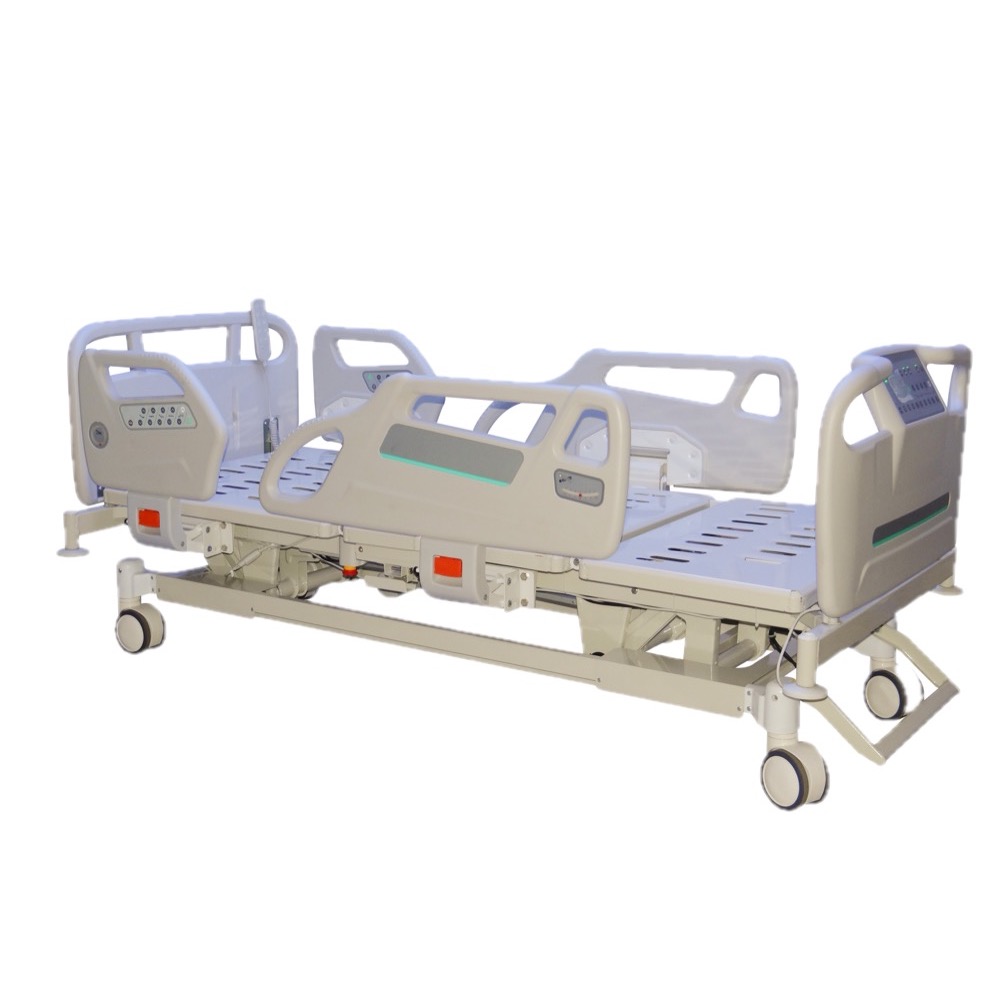
The names describe a direction, not a complete configuration
An ICU bed and a standard hospital bed can look similar in a photograph. Both provide a place for a patient to rest, and both may have adjustable sections, side rails, and casters. The difference becomes clearer when a buyer looks at the intended setting, the available adjustments, and the configuration of a specific model.
In this article, standard hospital bed means a bed being considered for a general hospital ward. It is a useful comparison term, not a fixed product specification. An ICU bed is a bed offered for an intensive care setting. The name alone does not tell you which controls, rails, or other components are included. Grace Medy currently lists five-function electric models in its ICU Hospital Beds collection, alongside manual and electric options in its wider Hospital Beds range.
A general ward may consider a manually adjusted bed, an electrically adjusted bed, or another configuration that suits its planned rooms and daily work. An ICU purchasing team may begin with a more focused group of beds, but it still needs to review individual models before deciding what to buy. Calling a bed an ICU bed does not establish that it has every function a buyer expects. Calling another bed a standard hospital bed does not mean that it has no electric adjustment.
The more useful first question is which two beds are being compared. Once the models are clear, their published information can be read side by side. Buyers who are still sorting out the broader categories can start with Types of Hospital Beds, then return to individual product pages for the details that affect their shortlist.
Adjustment options are one of the clearest differences to review
The adjustment system tells a buyer more than the label on the category page. Grace Medy's Manual Hospital Bed lists manual back-rest, knee-rest, and height adjustment. Its Electric Hospital Bed lists electric adjustment of those areas. The current ICU collection presents five-function electric models for review.
That creates a useful starting comparison. A buyer can examine how each bed adjusts and which adjustments are published for the selected model. A manual ward bed requires a different approach to adjustment from an electric bed. Two electric beds may also differ in their published functions and controls. The words manual, electric, and five-function help narrow the search, but they do not replace a model-specific description.
Take the Electric Critical Care Bed listed by Grace Medy as one example. Its product page describes motorized back-rest, knee-rest, and height adjustment, as well as additional published positioning and control functions. Those details belong to that model. They should not be copied into a description of every bed in the ICU collection. The same care applies in the other direction: a feature shown for one general ward bed should not be assumed for all ward beds.
For a buyer, the practical task is to write down the adjustments the project requires, then check each shortlisted model against that list. The How to Choose a Hospital Bed guide can help turn a broad product search into a more focused comparison.
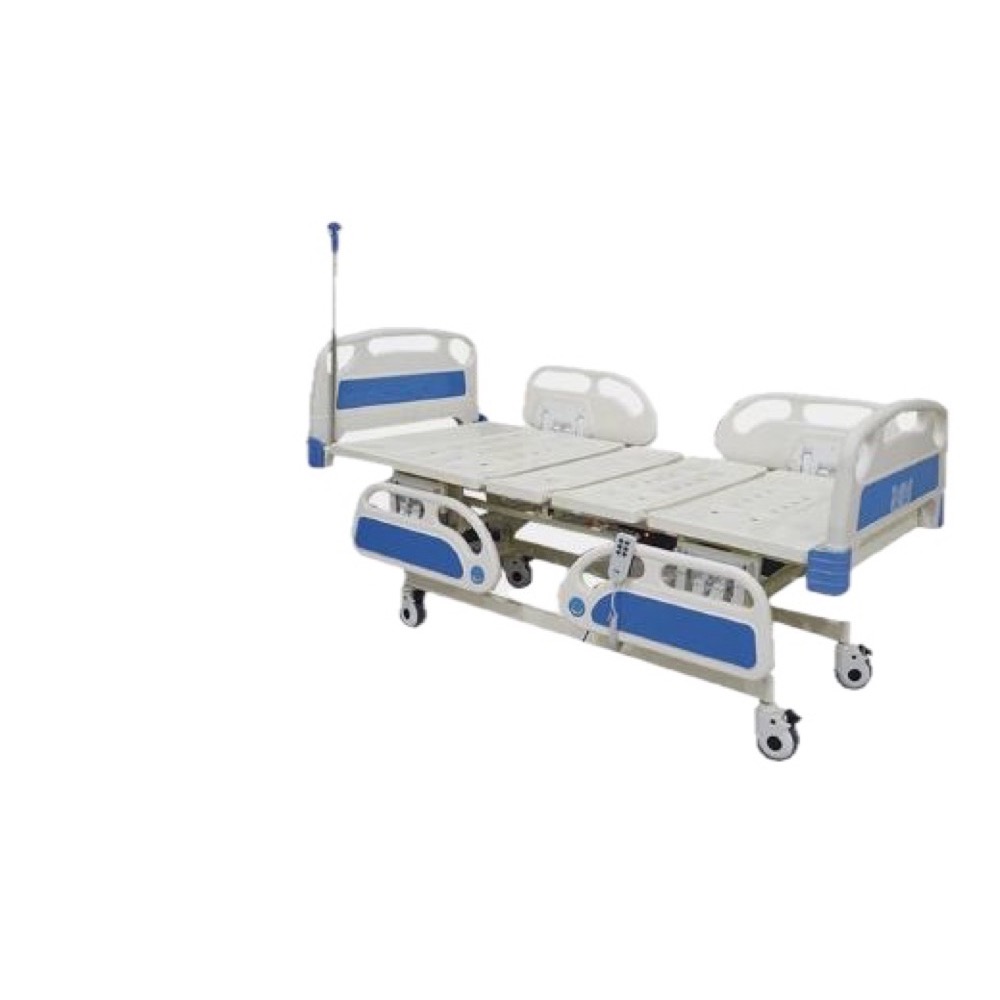
Components can change the buying decision
Adjustment functions are only part of the picture. Side rails, head and foot boards, casters, brakes, and controls also affect whether a product fits the intended purchase. A photograph can help a buyer spot these areas, but it may not show how a component operates or whether it is included in the quoted configuration.
Start with the rails. Their material, shape, and folding arrangement may differ between products. A buyer comparing beds for different rooms should record the rail configuration shown or described for each selected model. The article How to Review Hospital Bed Side Rails provides a closer look at the rail questions that belong in a product review.
Then look at movement and controls. Some published product descriptions identify a caster or brake arrangement; others may leave details that need to be confirmed during the inquiry. Controls also deserve attention on an electric bed. The buyer needs to know which adjustments the selected controls operate and what the current product information actually shows. The parts of a hospital bed guide helps readers identify these components before comparing two listings.
A useful comparison shows the buyer which parts differ, which details are documented, and which questions remain open. That is more helpful than judging two beds from their category names.
Match the comparison to the intended rooms
A project may need beds for more than one hospital area. The purchasing team can begin by separating the rooms in the request, then reviewing the available bed directions for each area. This makes it easier to avoid ordering one configuration simply because it appeared first in a catalogue.
Imagine a general planning exercise in which a team is reviewing beds for a ward and a separate ICU area. One person has collected manual ward-bed pages, another has found electric ward beds, and a third has gathered ICU bed pages. This is an illustrative example, not a customer project. The team first agrees on the intended area for each group of beds. It then compares published adjustments and components within the relevant group, recording any information that still needs to be requested. The result is a clearer product discussion without assuming that all rooms need the same bed.
A room plan also affects which details deserve attention first. A team that is still comparing broad directions can start with the product categories. A team that has already shortlisted two models can spend its time on their adjustment methods and listed components. If the planned use or required configuration is unclear, the team can describe the intended area and ask the supplier for current details of suitable models. The Hospital Wards page gives a useful starting point for describing the project setting.
Compare specific models side by side
Once a buyer has selected two candidates, a short comparison can expose the real difference. First write down each product name or model and link. Then compare the adjustment information shown on both pages, followed by the rails, boards, casters, brakes, and controls. Put unanswered questions in a separate column or note so they do not turn into assumptions.
For example, the general ward candidate might be a manual or electric hospital bed from the wider range, and the ICU candidate might be a five-function electric model from the ICU collection. Those are product directions, not complete specifications. The comparison works best after the buyer replaces each broad direction with a specific model. Two beds may share an adjustment type but differ in the way their components are presented. A buyer may also find that one product page provides an answer while the other requires a follow-up.
If the shortlist includes both a manual and an electric ward bed, compare those separately before choosing a ward-bed direction. The article Semi Electric and Full Electric Hospital Beds Compared may help buyers think about adjustment approaches, but current product pages remain the source for what each selected model includes. The goal is to leave the comparison with a shorter, clearer list of options and questions.
Turn the comparison into a useful inquiry
By this stage, a buyer should be able to say more than “we need ICU beds” or “we need standard beds.” A useful inquiry identifies the intended hospital area, the models under consideration, the quantity being planned, and the destination. It also lists the functions or components that need confirmation. If product documents or packaging information are needed for the purchase review, those requests can be included with the model names.
For example, a team could send links to one shortlisted ward bed and one ICU bed, then ask for the current configuration information for each. That gives the supplier a clear basis for responding and helps the team keep answers attached to the right product. Grace Medy can then discuss the available hospital-bed options in relation to the actual request, rather than trying to interpret a broad category label.
The difference between ICU beds and standard hospital beds is best understood through the products being compared: their intended setting, published adjustment functions, components, and confirmed configuration. Use the Hospital Beds and ICU Hospital Beds pages to create a shortlist, then contact Grace Medy with the specific models and questions that will move the purchase forward.
Continue your product review
Review ICU hospital beds · Explore hospital beds · How to choose a hospital bed · Ask about selected bed models