
Buyer guide
How Many Functions Does an ICU Bed Need?
Understand what the five functions on one published ICU bed mean and how to check the functions of a selected model.
How Many Functions Can an ICU Bed Have?
An ICU bed does not need one fixed number of functions in every hospital. The number describes the adjustments offered by a particular bed. It helps buyers narrow a product search, but it cannot tell the whole story on its own. To understand what a bed can do, you need to read the named functions on its product page.
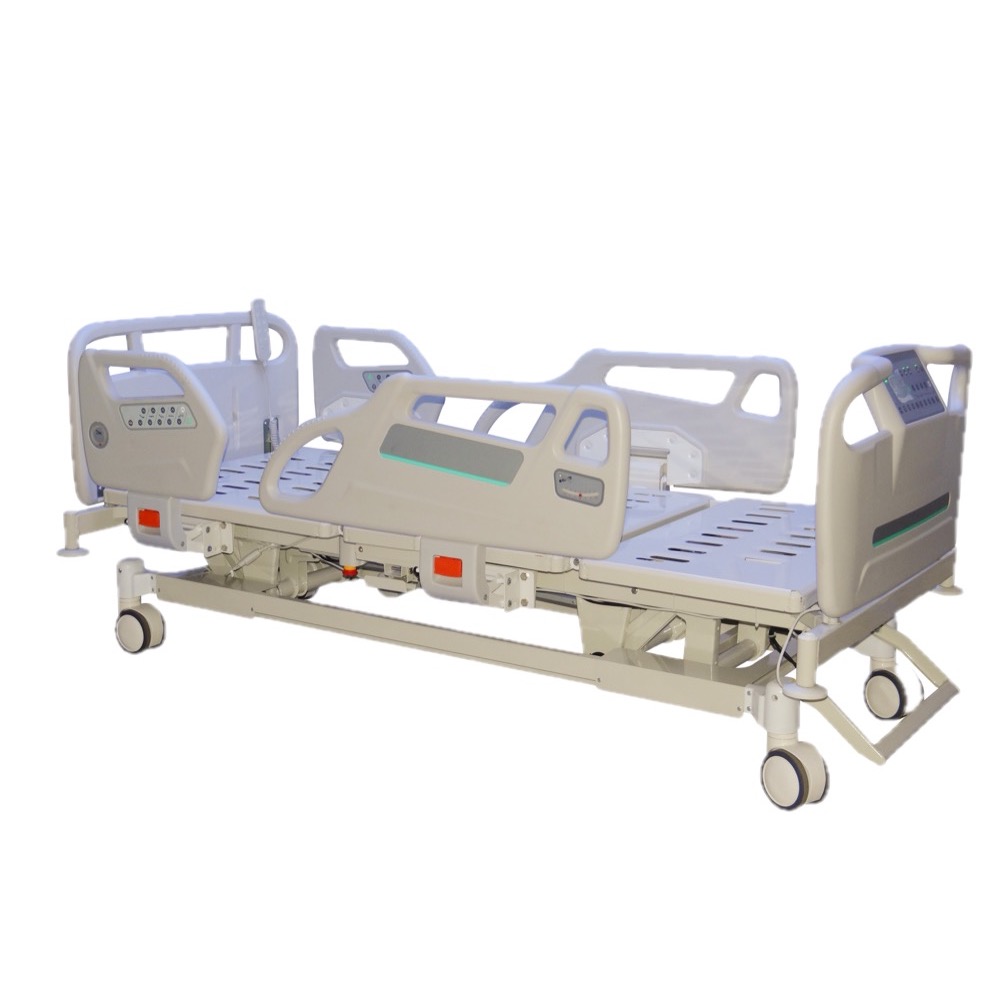
Grace Medy currently presents five-function electric beds in its ICU Hospital Beds collection. One published example is the Electric Critical Care Bed. Its product information identifies five bed adjustments: back-rest movement, knee-rest movement, height adjustment, Trendelenburg tilt, and reverse Trendelenburg tilt. Looking at each movement in plain terms makes five-function much easier to understand.
A function is an adjustment the bed is designed to make. The function count gives a quick description of the product, much as three-function or five-function does in a catalogue. It does not describe every control, component, or accessory on the bed. For example, a bed may raise its back-rest, raise its knee section, and change its overall height. Those are three different adjustments. A product may also offer two directions of whole-bed tilt. Together, these movements can be described as five functions. The exact names and grouping should still be checked against the selected product's current information.
This distinction matters because a buyer can see five-function ICU bed on several pages and assume the products are identical. They may share a function count yet differ in controls, side rails, casters, or other listed components. Even the way a supplier describes its adjustments may vary. Start with the number to find a relevant product direction, then read the function list to learn what that number means for the bed in front of you.
The wider Hospital Beds collection also includes other manual and electric directions. Comparing those pages can help explain why the number of functions belongs to a specific bed, rather than to every bed used in one hospital area. If you are preparing a purchase, write down the adjustments you need to review. Then see which published models list those movements. A function count is useful only after you know what is being counted.
What Are the Five Functions on the Example ICU Bed?
The published Electric Critical Care Bed gives us a concrete example. Its product page describes motorized back-rest and knee-rest adjustment, height adjustment, and two directions of whole-bed tilt. These are the five adjustments discussed below. They describe this model's published product information; they are not a universal checklist for every ICU bed.
Back-rest adjustment changes the angle of the upper section of the bed platform. From the side, the difference is easy to picture: the section supporting the upper body can move from a flatter position toward a raised position. On a product page, the buyer should look for a clear description of this movement and its controls. Adjustable back-rest tells you the direction of movement, but the selected model's information supplies the actual details.
Knee-rest adjustment changes the position of the section around the knees and legs. It is separate from back-rest adjustment. A bed can therefore offer both movements without treating them as one function. During a comparison, it helps to name them separately. If a requirement calls for both upper and lower platform adjustment, the buyer can check that each movement appears in the candidate model's published list.
Height adjustment raises or lowers the bed platform as a whole. It differs from moving only the back-rest or knee section. For a purchasing team, the important first point is to identify height adjustment as its own function. If a project needs a particular height range, that range must then be checked on the chosen model's product information. It should not be borrowed from another bed that happens to share the same function count.
The remaining two functions involve whole-bed tilt. With Trendelenburg tilt, the bed platform tilts in one direction. With reverse Trendelenburg tilt, it tilts in the opposite direction. These are two distinct movements in the example model's published function information. The basic product distinction is straightforward: the bed can tilt one way or the other. Any question about the available angle or operation belongs to the selected model's documentation.
Together, these five movements explain the function count on this example bed. A buyer who needs a wider introduction to the bed's physical sections can read What Are the Parts of a Hospital Bed. Parts and functions are related, but they answer different questions. A part is a component you can identify on the product; a function is an adjustment the product can perform.

How Are Those Functions Controlled?
The Electric Critical Care Bed's published description identifies motorized adjustment and central control. It also mentions one-button sitting, flattening, and CPR functions. Those control descriptions should be read alongside the five bed adjustments, without automatically treating every button or preset as an extra item in the five-function count. This article describes the product controls, not clinical use of those controls.
Think of a simple, general example: one person reviewing a product page counts the five named bed movements, while another counts the labels on a control panel. They may arrive at different totals because they are counting different things. This is an illustrative reading example, not a customer case. The way to resolve it is to return to the product's stated function list and ask how its controls operate those movements.
An electric adjustment means the relevant movement is powered on the selected product. It does not mean that every electric hospital bed has the same number of movements. Grace Medy's Electric Hospital Bed in the broader hospital-bed range is presented with a three-function configuration. Its page lists electric back-rest, knee-rest, and height adjustment. Both product directions use electric adjustment, but their published function lists are different.
For a buyer, the control questions can remain practical. Which named adjustment does each control operate? Does the product page describe a central control or another control arrangement? Are any listed one-button actions presets associated with the bed? The product page may answer some of these questions. If an answer is needed for a purchase and is not clear, ask for the current information for that exact model.
The same approach helps with manual and electric comparisons. The Manual Hospital Bed lists manual adjustment of the back-rest, knee-rest, and height. Those movements can be discussed using the same plain names, although their adjustment method differs. If the distinction between powered approaches is relevant to your search, Semi Electric and Full Electric Hospital Beds Compared offers related context. Keep the final decision tied to the product you intend to order.
Do All ICU Beds Have the Same Five Functions?
No. ICU bed describes a product direction, and five-function describes the count used for a particular product. Neither phrase, by itself, confirms a complete shared specification across every bed offered for an ICU project.
Grace Medy currently groups several models under ICU Hospital Beds. The collection introduces them as five-function electric models. That gives buyers a focused list to review, but it does not mean they should copy all details from one product page onto another. The named adjustments, controls, rails, boards, and caster arrangements should be checked for each shortlisted model.
The function count should also be kept separate from the bed's components. Side rails are an example. Their design may be important in a product comparison, yet a rail is not automatically one of the bed's five adjustment functions. The guide How to Review Hospital Bed Side Rails explains how to examine this component as its own purchasing detail. The same separation applies to casters, head and foot boards, and other visible parts.
A team can keep this review simple. Put two shortlisted models next to each other and write their published functions in full words, rather than only writing five-function above both columns. Add a separate line for the control arrangement and another for the components that matter to the project. If a page does not provide a required answer, mark it for confirmation. This avoids turning a shared number into an assumed shared configuration.
It also helps to distinguish this article from the broader ICU bed and standard hospital bed comparison. That guide considers product direction and components across two bed categories. Here, the narrower question is how many adjustments an ICU bed offers and what each named adjustment does.
How to Confirm an ICU Bed’s Functions
Begin with the ICU Hospital Beds collection and open the product pages that appear relevant. Read each function name carefully. For the Electric Critical Care Bed example, the published movements are back-rest, knee-rest, height, Trendelenburg tilt, and reverse Trendelenburg tilt. Record the names rather than relying only on the number five.
Next, check how the page describes the controls. Keep control methods and one-button actions in a separate note from the five adjustment movements. This makes it easier to explain the product to colleagues and to compare it with another model. If the team is still deciding which broader bed direction fits the project, How to Choose a Hospital Bed can help organize that earlier choice.
An inquiry should then identify the selected model and the exact points requiring confirmation. A buyer might say, for example, that the team is reviewing a five-function ICU bed and wants the current description of its adjustment movements and control arrangement. Add the planned quantity and destination if the discussion is moving toward a quotation. This is a general example of a clear request, not a description of a real customer inquiry.
So, how many functions does an ICU bed need? Enough to provide the adjustments required for the selected purchase, confirmed on the actual model. The five-function Electric Critical Care Bed gives a clear example of five named movements, but the number should never stand in for the function list. Once you have a shortlist, contact Grace Medy with the model links and the functions you want to confirm.
Continue your product review
Explore ICU hospital beds · Review the example five-function bed · Confirm a selected model